Choosing the right journal for your specific requirements and manuscript is very important because you are busy and so are the reviewers. Inappropriate submissions, just waste your own time and then getting rejected and format the whole manuscript for a different journal, it is all just a pain the you really don’t want to bother going through.
Tip : Start searching for a journal even before you start writing your manuscript so that you write it according to their format and therefore don’t have to change formats later on.
There is often a trade-off:
- Higher impact factor → lower acceptance rate
- Lower impact factor → potentially higher acceptance rate
Choose the journal that is:
- Most suitable for your research topic
- Most likely to reach your intended audience
- Realistic for your study’s strength and design
Aim for the highest possible impact within realistic expectations.
Let’s begin!
STEP 1: Talk to Experienced Researchers
Speak to:
- Mentors
- Senior residents
- Colleagues who have published
They can tell you:
- Which journals accept your type of study
- Typical review timelines
- Practical submission experiences
Especially true for beginners, talk to other researchers or seniors very active in the academic field or your mentor (people who are essentially, used to submitting papers – in your area of interest) – they know what type of papers are accepted in which journals depending on specialty. (Eg: ask your neurology consultant about neurology journals)
STEP 2
Narrow down to a bunch of possibly valid journals and then go through each of their author guidelines
What to look for in journal guidelines:
The formula is;
- A – Audience: Broad vs Narrow
- If your project is highly specialized, a niche journal may be better.
- If your findings have wide relevance, a broader journal may offer greater visibility.
- Editors choose papers that are relevant to their readership.
2. S – Scope
Read the journal’s:
- Aims
- Mission
- Scope
Confirm whether they accept:
- Original research
- Clinical audits
- Case reports
- Systematic reviews
- Meta-analyses
- Clinical trials
3. S – Study Design
Look at:
- Table of contents of recent issues
- Previous archives
Ask:
- How many RCTs do they publish?
- How many case reports?
- Do they favor systematic reviews?
- Do they publish audits?
If your study type rarely appears, reconsider submission.
4. E – Expense: Consider Cost vs Reach
Open Access
- Article Processing Charges (APCs) (often $1500–$3000 or more)
- Wider reach
- Freely accessible to readers
- Not necessarily predatory — depends on publisher reputation
Subscription
- Usually no publication fee
- Narrower reach
- Readers typically access through institutions
- Audience may be more specialized and genuinely interested
5. T – Time:
Ask yourself:
- Is your paper time-sensitive?
- Do you need it published for an application (e.g., residency, fellowship, promotion, grant)?
- How long are you willing to wait?
Check the journal website for:
- Average review time
- Time to first decision
- Time to publication
Some journals take months; others are faster.
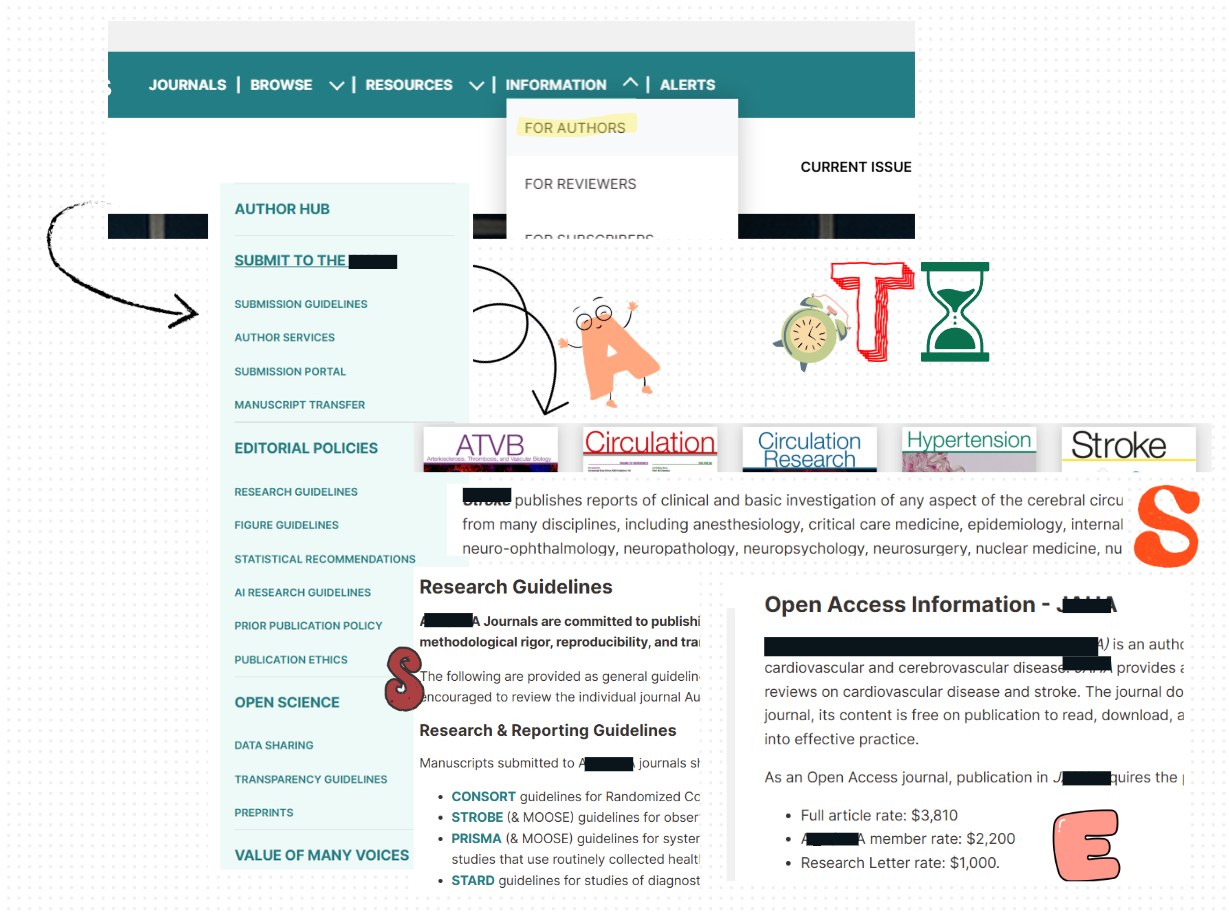
ASSET is sort of like a formula which you can use to come up with the right answer for this question.
This is an example of how you would go about looking for these things in a journal – most of these things are usually all under the “about” section of a journal.
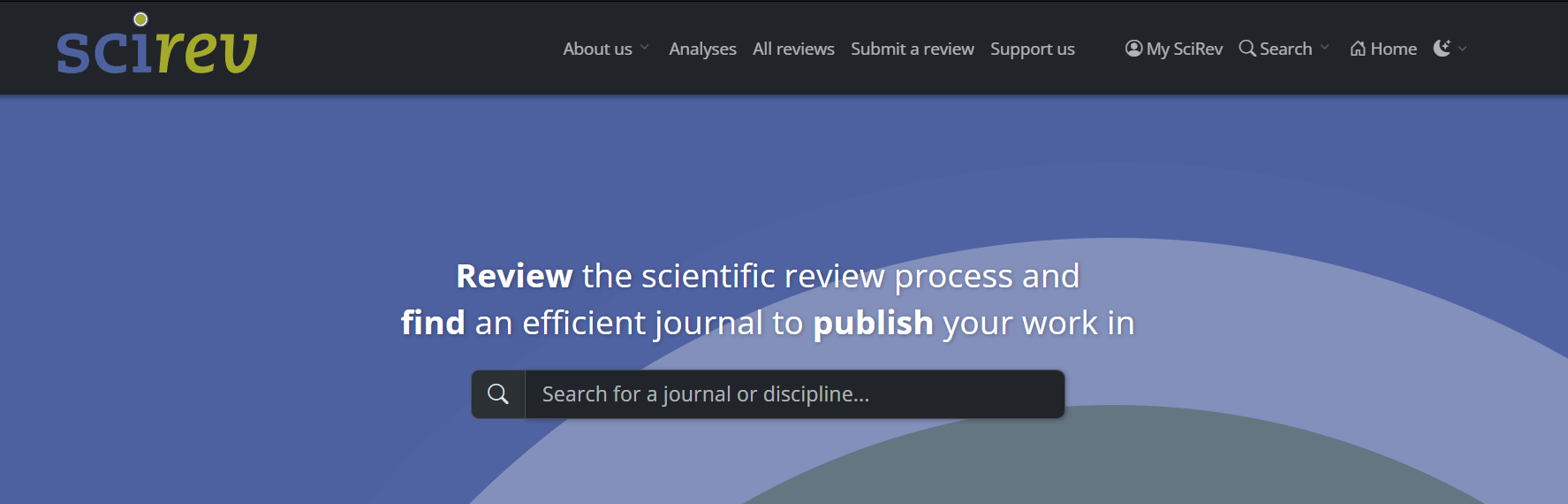
Another thing you can do to find out journal turnaround time is visit SciRev, this only works for bigger journals.
STEP 3: Use Journal Finder Tools
If you’re unsure where to submit, use journal selection tools such as:
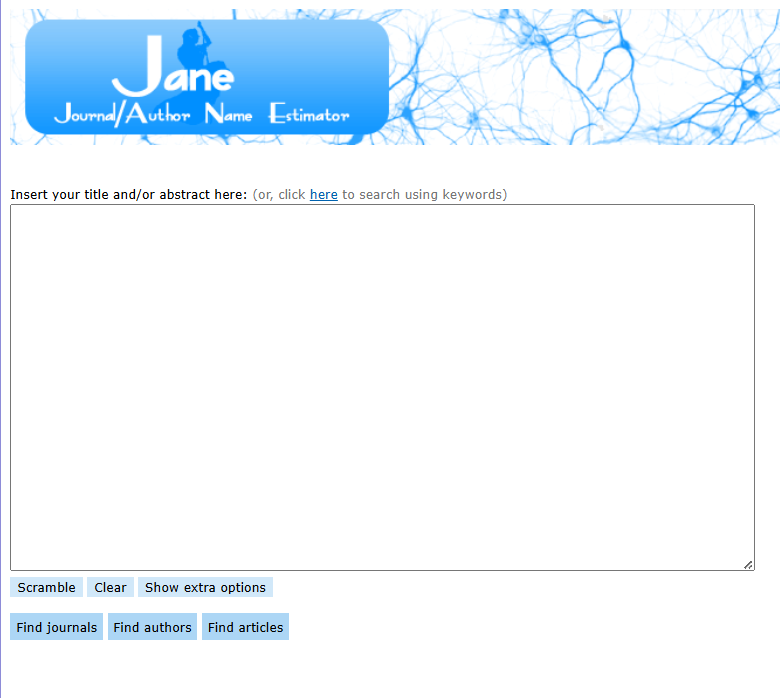
- JANE (Journal/Author Name Estimator)
Paste your title and abstract, and it suggests journals that have published similar work.
- Elsevier Journal Finder
Matches your manuscript to suitable journals in their database.

These tools give you a starting point; but always verify suitability yourself.
Avoid Predatory Journals
Be cautious of journals that:
- Do not conduct proper peer review
- Promise unrealistically fast publication
- Publish large volumes of low-quality articles
- Have an extremely broad or unclear scope
- Lack transparent editorial policies and fee structures
Always check editorial board credibility, indexing status, and transparency of publication charges.